Дубай пятый год подряд возглавляет мировой рейтинг прямых иностранных инвестиций. Для инвесторов более важный вопрос заключается в том, что происходит с этим капиталом после его прибытия.
For the fifth year running, Dubai sits at the top of the Financial Times’ fDi Markets ranking for greenfield foreign direct investment. The June 2026 data confirms the streak. Five years of leadership is not a moment. It is a pattern, and patterns are what global capital pays attention to.
What sits behind the ranking is the more useful question. Investors are not arriving for short positions. They are arriving to build headquarters, operating platforms, and family bases. The kind of presence that takes a decade to construct. That shift, from transactional interest to long-term commitment, has been the bigger change.
The Shape of the Inflows
Five consecutive years at the top is unusual. Equally telling is the breadth of where the capital is going. Greenfield projects span artificial intelligence, financial and professional services, life sciences, creative industries, and environmental technology. Dubai has held the global lead in AI-related FDI for four straight years, and the same for headquarters-related projects. A city pulling capital across that many sectors at once is harder to dislodge than one running on a single engine.
The Dubai Economic Agenda, known as D33, gives the inflows a stated horizon. The plan, doubling the economy by 2033 and placing Dubai among the world’s top three global cities, has been operating long enough that early results are tracking the trajectory. For an allocator, a published roadmap with measurable targets is something to underwrite against rather than guess at.
Geography reinforces the case. Within a single working day, an investor can move across Asian and European trading hours from the same desk. Aviation places most of the world’s population within an eight-hour flight, and logistics infrastructure handles cross-border trade at a scale most cities cannot match. For families managing interests across multiple jurisdictions, that reach is operational rather than theoretical.
Why Property Anchors the Thesis
Property in Dubai is where capital, residency, and lifestyle converge in a single decision. Few global markets offer that combination, which is why international ownership has shifted from speculative buying to portfolio construction.
The market has matured. Buyers now weigh developer execution, infrastructure adjacency, community design, and exit liquidity with the discipline they apply to any other asset class. The era of buying on a brochure has passed. Off-plan continues to dominate transaction volume, but the conversation has moved from launch incentives to delivery credibility.
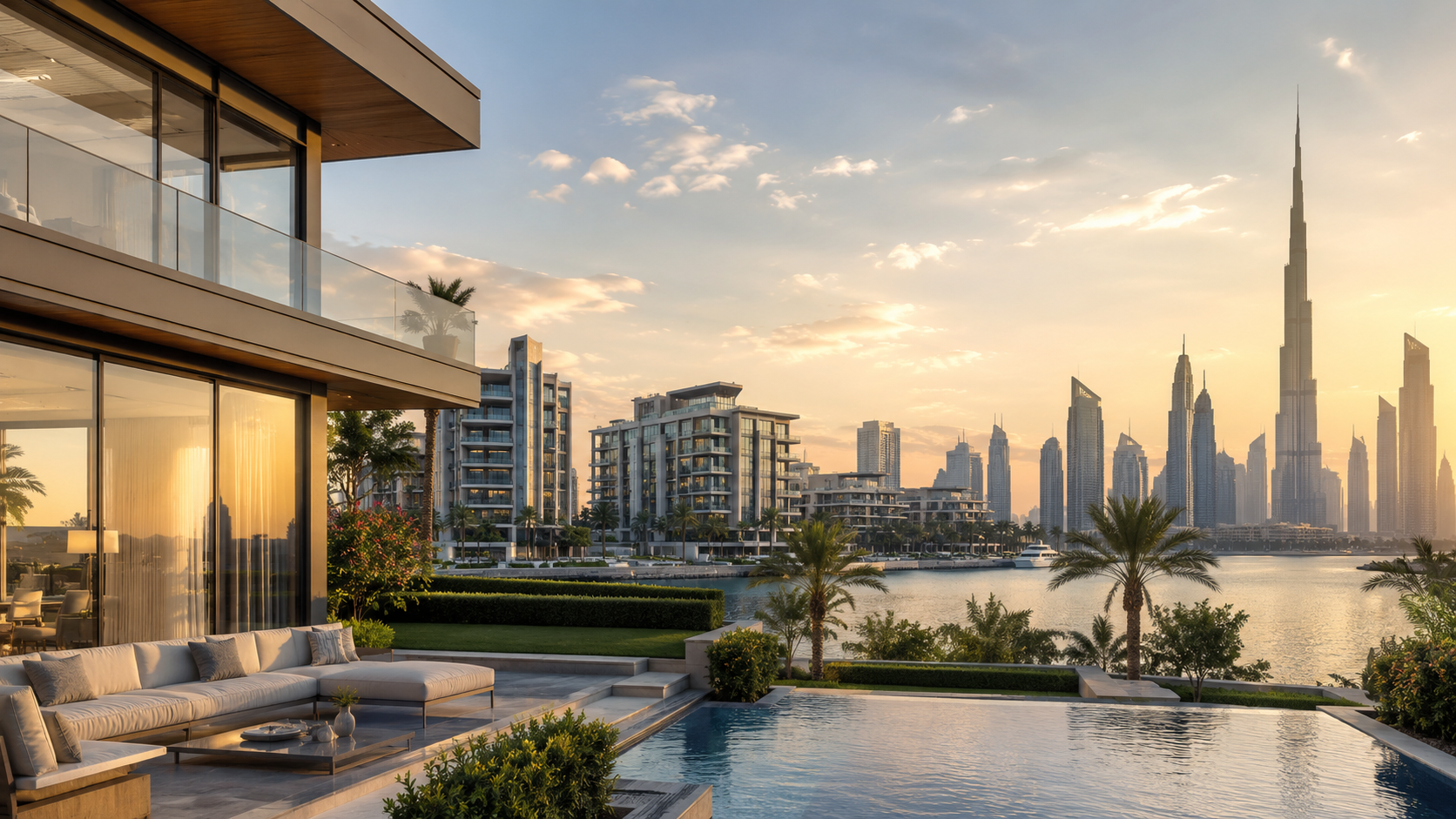
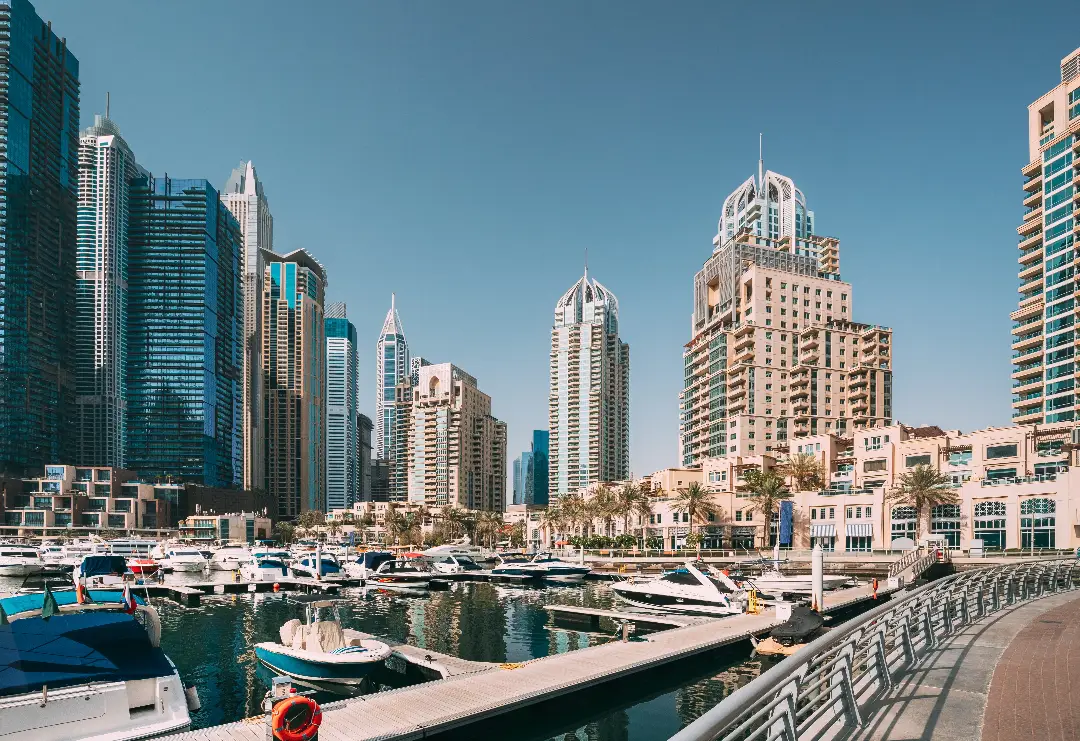
Prime, branded, and waterfront residences continue to draw the deepest international demand, in part because their scarcity is structural rather than cyclical. There is only so much usable Palm. Only so much Burj Khalifa frontage. Only so much Dubai Marina coastline. Limited supply against rising demand is the foundation underneath those communities.
The communities that consistently sit at the centre of international demand span both ends of the market, from ultra-prime waterfront to the commercial core.
Palm Jumeirah
Type: Residential
Profile: Iconic waterfront villas and branded residences.
Emirates Hills
Type: Residential
Profile: Gated ultra-prime villas, scarcity-driven.
Jumeirah Bay Island
Type: Residential
Profile: Bulgari-anchored, ultra-prime waterfront.
District One, MBR City
Type: Residential
Profile: Lagoon-front villas, newer prime supply.
Downtown Dubai
Type: Residential and Commercial
Profile: Branded apartments and offices around Burj Khalifa.
DIFC
Type: Commercial
Profile: Prime offices and branded residences in the financial district.
Business Bay
Type: Residential and Commercial
Profile: Waterfront commercial and residential towers.
The right question for an entering investor is no longer whether to acquire in Dubai. It is how the acquisition is structured: which community, which developer, which ownership vehicle, which exit horizon.
The Mechanics of Ownership
The tax position is straightforward. There is no annual property tax on residential real estate. There is no personal income tax on rental income or capital gains. The primary transaction cost is a one-time four percent transfer fee paid to the Dubai Land Department at registration.
Across a long hold, the absence of recurring taxes changes net yield mathematics. More of every dirham of rent reaches the owner. Capital appreciation is not eroded by annual assessments. For investors comparing Dubai to mature property markets in London, New York, or Singapore, the structural advantage compounds quietly across each year of ownership.
A qualifying property investment also opens access to the UAE’s ten-year renewable Golden Visa. The threshold, AED 2 million, can be met through a single property or multiple properties combined. Mortgaged and approved off-plan units qualify under current rules. The visa extends to spouse, children, and domestic staff, and there is no requirement to maintain employment or active business in the country to keep it. Recent revisions removed the earlier minimum-equity rule.
For an investor, this changes the nature of the purchase. A Dubai property acquisition is no longer a financial transaction with a separate residency question attached. It is one decision with both outcomes built in.
A Market Built for the Long Term
The regulatory architecture has spent the past decade catching up to the kind of capital now arriving. Off-plan sales are protected through escrow accounts mandated under Dubai Law No. 8 of 2007. The Real Estate Regulatory Agency oversees developers and brokers. The Dubai Land Department maintains transparent title registration and has begun integrating tokenised property platforms, a signal that the regulator is building for the next decade rather than the last.
The lifestyle case is well known. Less discussed is how integrated lifestyle infrastructure affects asset performance over time. Marina access, championship golf, the depth of the dining scene, and the cultural calendar all sustain the tenant and owner-occupier demand that holds prime values through cycles. A property in a community with thin amenities tracks the wider market. A property in a community with integrated infrastructure tends to outperform it.
Where to Take the Conversation Next
The opportunity in Dubai is no longer about access. That part is solved. The work now is in how the access is structured. The right developer. The right community. The right ownership vehicle. The right exit horizon.
CrossBridge advises global investors and family offices entering, expanding within, or repositioning across Dubai’s luxury property market. The approach treats property as long-term capital allocation, with market intelligence, legal structuring, and financial analysis on the front end, and portfolio oversight and lifestyle integration on the back.
If you are considering a first acquisition in Dubai, or refining an existing portfolio, begin the conversation with the advisory team. Discussions are confidential and by appointment.