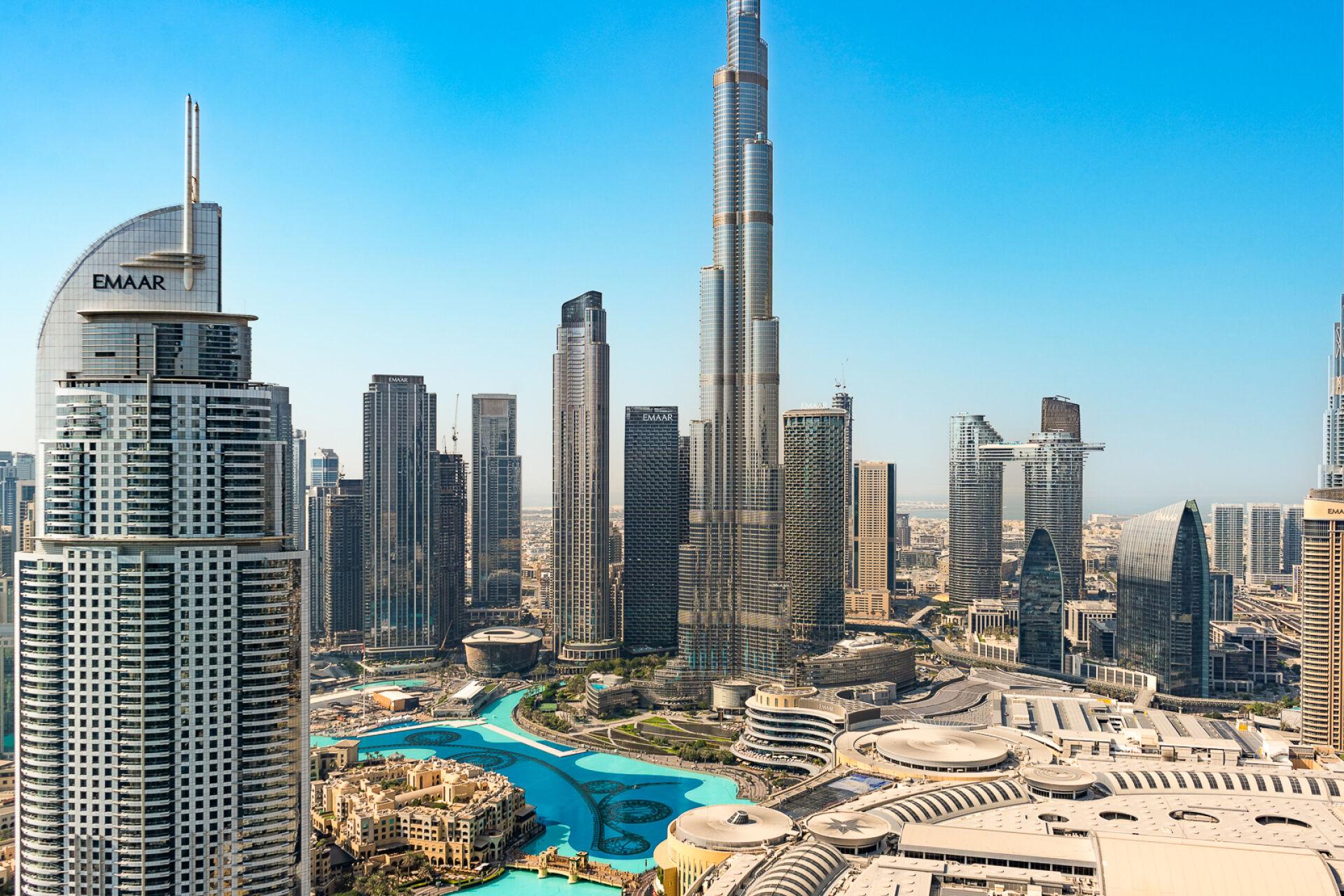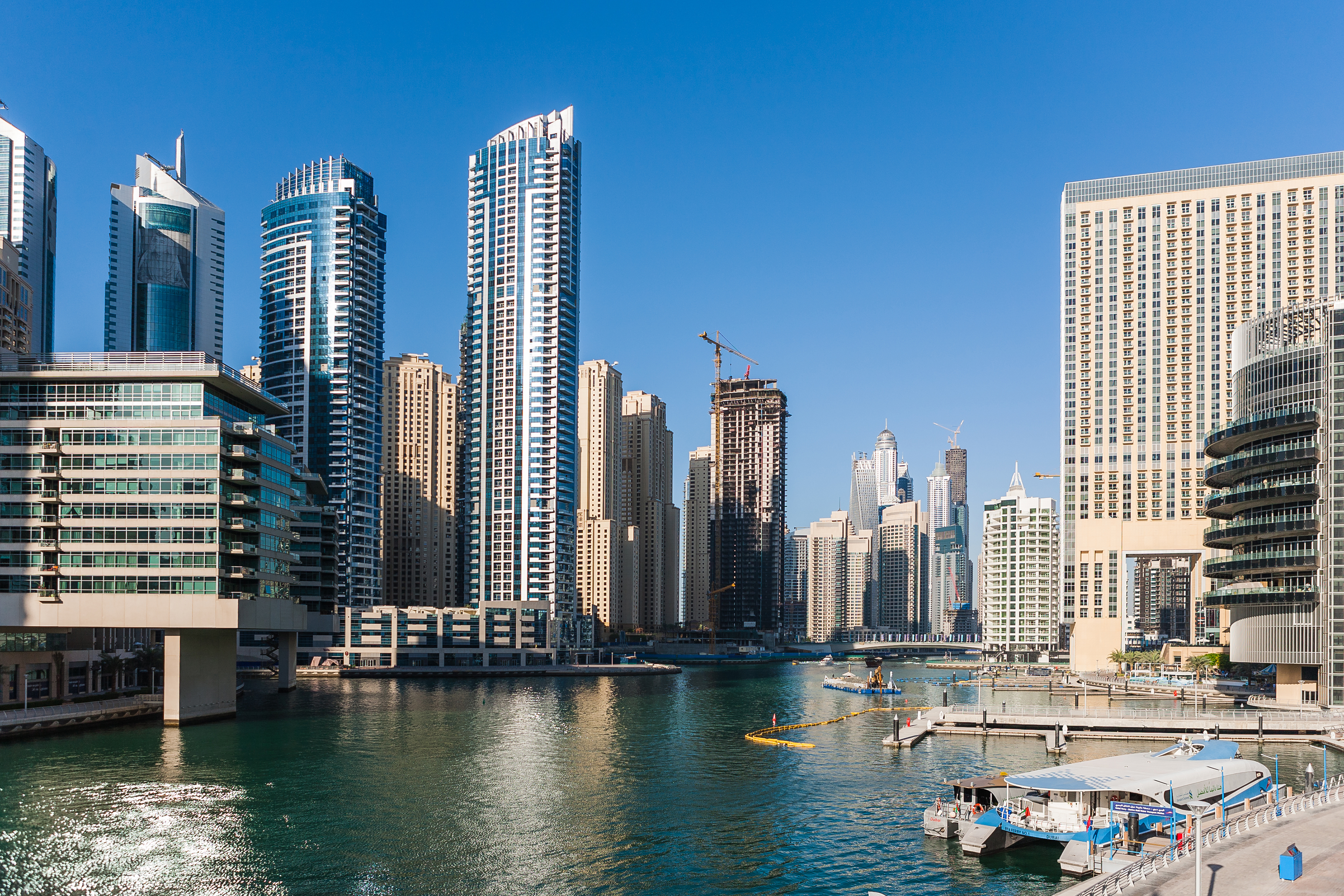
Competing pages report one average price and one average yield for a city that behaves as at least six separate submarkets. This article segments the market by property type, community class and stage of build, explains the demand mechanics behind each, and gives the reader a repeatable way to read the data themselves.
There is no single answer to the question of how this market is performing, because it has not moved as one asset class for several years. Apartments and villas, ready stock and off plan, prime addresses and emerging districts can post different year on year numbers in the same quarter.
That is the most useful thing a buyer can understand before looking at any listing. A headline average tells you very little about the building you are actually considering.
What follows breaks the market into the segments that behave independently, explains what drives each one, and sets out how to verify any claim before you act on it.
Dubai Property Market Overview
The market is best read as a set of parallel submarkets defined by property type, stage of build, community class and price band, each with its own demand base and supply pipeline.
Four observations hold across recent reporting periods and are worth carrying into any analysis:
- Transaction volumes and value are tracked publicly. The Dubai Land Department registers every sale and lease, which makes this one of the more verifiable markets available to an international buyer.
- Segments diverge. Recent monthly market indices show apartments, villas, ready and off plan stock recording materially different year on year movements in the same period.
- Buyer composition is international. Demand comes from residents converting from renting, regional buyers, and overseas purchasers acquiring for income, residency or use.
- Supply is not evenly distributed. New handovers concentrate in particular districts and unit types rather than spreading evenly across the city.
Read together, these four points explain why two buyers can be right at the same time when one says the market is strong and the other says it has cooled.
Where the Market Has Come From
The recovery phase
Following the previous correction, pricing in many communities sat below replacement cost, transaction volumes were thin, and stock changed hands slowly. Buyers who entered here were pricing risk, not momentum.
The expansion phase
Reopening, visa reform and a wave of relocation by entrepreneurs, remote professionals and family offices lifted both occupancy and sales volumes. Villa and townhouse stock in established family communities tightened first because it could not be produced quickly. Prime waterfront and low density districts followed.
The current phase
Momentum has become uneven. Some segments continue to record growth, others have flattened as new supply reached handover. Rental growth has moderated in the districts receiving the most completions while holding firmer where new stock cannot physically be added.
The practical conclusion is not a forecast. It is that entry price relative to genuinely comparable transactions matters more now than it did when everything was rising together.
What Is Driving the Dubai Property Market?
Demand here is created by population and business activity, not by property speculation alone. These are the drivers worth tracking.
Population and rental demand
The resident population is overwhelmingly expatriate, and most arrivals rent before they buy. Every net addition to the population is first a tenant, which is why leasing volumes tend to lead sales volumes rather than follow them.
International buyers
Overseas purchasers buy for three distinct reasons: income, residency eligibility and use as a second home. Each reason points to a different property, which is why international demand does not concentrate in one price band.
Tourism and short term stays
Visitor volumes support the holiday home segment, which competes with long term leasing for the same apartment stock in a handful of districts. Where short term returns are strong, long term rental supply tightens.
Business and employment growth
Company formation, financial services, logistics and technology employment generate the salaried tenant base that underpins mid market rents. Corporate demand also drives office and retail take up, which is a separate market with its own dynamics and its own specialists among commercial real estate agents Dubai buyers use for that asset class.
Infrastructure delivery
Metro extensions, road capacity, schools, hospitals and retail anchors change the value of a district in a way that is visible before it is priced. Districts announce their trajectory through infrastructure long before transacted prices confirm it.
New residential supply
Handover volumes are the single most underweighted factor in most buyer analysis. Supply arriving into a specific submarket affects rents in that submarket first and prices second.
Regulation and transparency
Escrow requirements, broker licensing, registered leases and a public transaction record reduce, though do not remove, the information gap between local and international buyers.
Property Prices by Type
There is no meaningful single average price. Each format is priced by a different logic.
| Format | What sets the price | What to analyse before offering |
|---|---|---|
| Apartments | Price per square foot, floor, view, building management | Service charge per square foot, rental evidence in the same tower |
| Villas | Plot size, built up area, community, upgrade condition | Land component, renovation cost, comparable plot sales |
| Townhouses | Entry price into a family community, layout efficiency | Handover pipeline in the same phase |
| Penthouses | Scarcity, ceiling height, terrace, view corridor | Narrow resale pool, longer selling period |
| Off plan | Payment plan structure, launch pricing, developer | Delivery record, pipeline in the same district |
| Ready | Existing income, condition, community maturity | Achieved rents, not asking rents |
Villas carry a land component that apartments do not, which is why villa pricing responds to scarcity more sharply and why buyers comparing luxury villas for sale in Dubai should treat plot and position as primary rather than secondary variables.
How Different Areas Behave
Grouping communities by behaviour is more useful than ranking them.
Prime and low density
Palm Jumeirah, Emirates Hills and comparable addresses are supply constrained by design. Pricing here is driven by scarcity and buyer depth rather than yield, and gross returns are typically lower than in mid market stock.
Business and rental districts
Business Bay, Dubai Marina and similar central districts carry the deepest tenant pools and the most transparent rental evidence. They also carry the most direct competition from new supply.
Family communities
Dubai Hills Estate, Arabian Ranches and equivalent master plans price against schools, healthcare, green space and commute. Demand is driven by occupation rather than yield, which makes it steadier and less sensitive to short cycles. Buyers comparing Dubai Hills villas for sale are usually buying a school catchment and a commute as much as a plot.
Emerging and master planned districts
Dubai Creek Harbour, Dubai South and similar districts carry growth potential tied to delivery. Their risk is execution and phasing rather than demand.
The Rental Side of the Market
Leasing is the larger half of the ecosystem by volume and the part most directly connected to investor returns.
The Dubai Land Department has reported registered tenancy contracts in the region of 1.38 million with a combined value near AED 126.4 billion for the 2025 period, an indication of the scale of formal leasing activity. [VERIFY CURRENT DATA: DLD source, exact metric and period]
Long term leasing
Standard annual tenancy contracts registered through the official system. Rent adjustments at renewal are governed by the applicable rental index rather than by landlord preference alone, which makes renewal timing a genuine asset management decision.
Short term and holiday rental
Higher gross revenue potential, higher operating cost, higher volatility and permit requirements. It is an operating business attached to a property, not a passive holding.
Gross yield and net return
Gross yield is annual rent divided by purchase price. Net return deducts service charges, cooling charges where applicable, letting and management fees, maintenance, insurance and vacancy. The gap between the two is widest in buildings with high service charges, which is why the charge per square foot should be requested before any offer. Buyers modelling this properly usually run the numbers as part of a wider benefits of investing in Dubai property assessment rather than in isolation.
Off Plan and Ready Stock Compared
| Factor | Off plan | Ready |
|---|---|---|
| Capital timing | Staged payments across construction | Full consideration at transfer |
| Income | None until handover | From the first tenancy |
| Evidence available | Plans, specification, developer record | Actual unit, actual community, actual rents |
| Principal risk | Delivery, specification, market at handover | Condition, service charges, entry price |
| Suits | Longer horizons, growth exposure | Income requirement, occupation, verification |
Neither is inherently better. The choice follows the holding period and whether income is needed from year one.
Is the Dubai Property Market Still Worth Entering?
It can be, under specific conditions rather than as a general proposition.
Conditions that support an entry
- Entry price supported by transacted comparables in the same building or cluster
- Genuine tenant or buyer demand in that specific submarket
- Service charges that leave a workable net return
- A developer and building with a credible delivery and management record
- A holding period long enough to absorb a cycle
- A defined exit route before purchase
Conditions that raise the risk
- Buying on launch momentum without comparables
- Ignoring the handover pipeline in the same district
- Relying on headline gross yields
- Leverage sized to best case rents
- No allowance for vacancy or service charge increases
- Buying a format with a narrow resale pool without accepting the longer exit
How to Read the Market Before You Buy
Three checks remove most of the guesswork.
- Use the official transaction record. Verify transacted prices for the specific building, cluster or plot through Dubai Land Department data rather than portal asking prices.
- Verify ownership status and title. Confirm the property classification and the registered owner before any payment, which is also where how freehold ownership works in Dubai becomes directly relevant to the transaction.
- Model net, not gross. Request the current service charge per square foot and the building reserve position, then rebuild the return with realistic vacancy.
Buyers who want the underlying logic set out formally can work through it alongside a structured approach to buy property in Dubai for investment rather than assembling it from listings.
Frequently Asked Questions
Is the Dubai property market a good investment?
It can be, depending on the segment. Returns vary by property type, community, entry price, service charge level and holding period rather than applying to the market as a whole. Income focused buyers should model net return after charges and vacancy. Capital focused buyers should prioritise scarcity, build quality and resale liquidity.
Are prices rising or falling?
Both, depending on the segment. Recent monthly indices have shown apartments, villas, ready and off plan stock moving differently in the same period. Any answer given for the whole market is unreliable. Check transacted prices for the specific building or community you are considering, using official Land Department data.
Is property here overpriced?
Relative to comparable global cities, entry pricing per square foot has generally remained below the established prime capitals, though individual buildings can be priced ahead of their evidence. The relevant test is not the city average but whether the specific unit is priced in line with recent transactions in the same tower or cluster.
What is happening with rental prices?
Rental growth has moderated in districts absorbing significant new handovers and held firmer where new supply cannot easily be added. Renewal increases are governed by the applicable rental index rather than set freely, so tenant retention and renewal timing materially affect an owner's realised income.
Is off plan a good option?
It suits buyers with a longer horizon who want staged payments and accept delivery, specification and market timing risk. It suits income requirements poorly, because there is no rent until handover. Ready stock offers verifiable rental evidence and an inspectable asset at a higher upfront cost.
Which areas perform best?
Different areas serve different objectives. Supply constrained prime addresses favour capital preservation, central business districts favour rental liquidity, master planned family communities favour occupation demand, and emerging districts carry growth potential tied to delivery risk. The right area follows the objective, not a ranking.
Reading the Market Before Choosing the Property
The most common error here is choosing a community first and a purpose second. The market rewards the opposite order: define the objective, identify the submarket that serves it, verify the numbers at building level, then negotiate on evidence.
If you are assessing an entry now, book a market briefing with CrossBridge covering the segments relevant to your objective, current transacted comparables and the service charge position in the buildings on your shortlist. CrossBridge advises buyers, not sellers, which is the difference between a market view and a listing pitch.