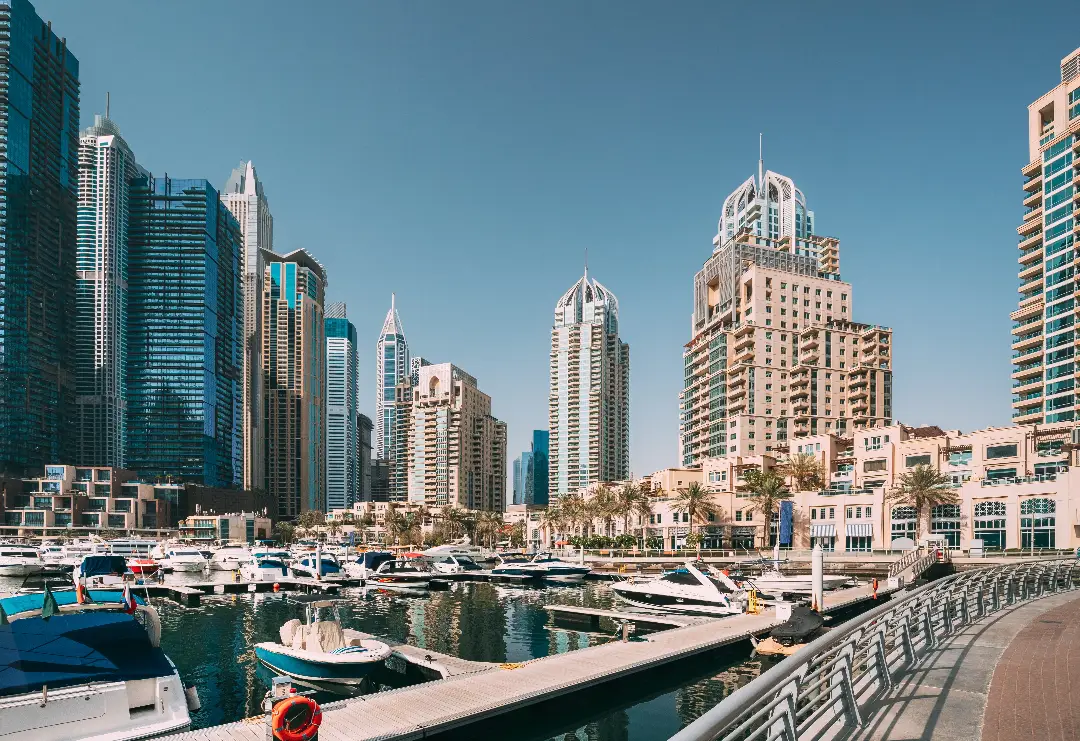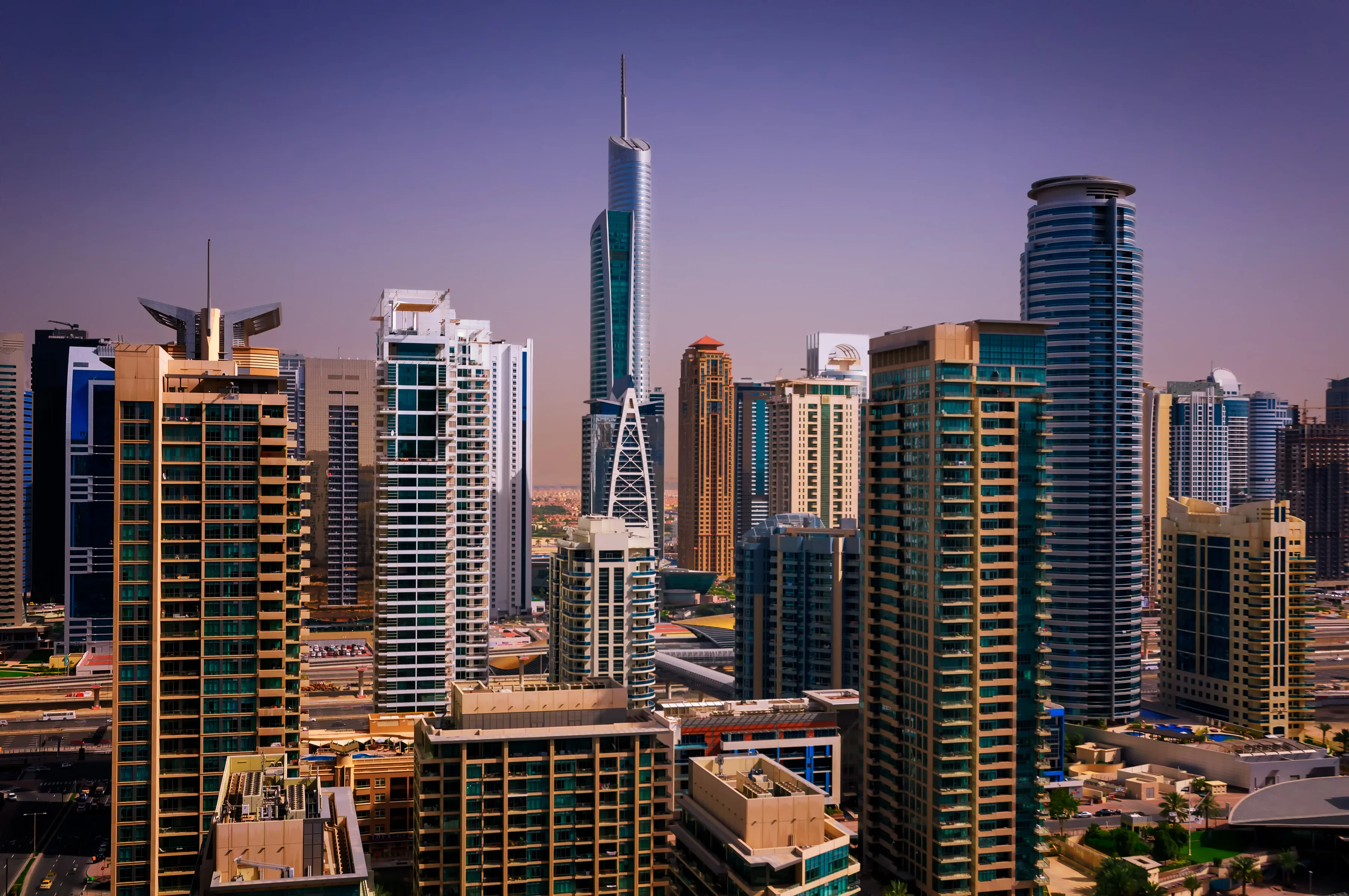
A medida que disminuyen las tensiones regionales, los precios de las propiedades en Dubái aumentan. CrossBridge analiza los datos del primer trimestre de 2026, los segmentos con mejor desempeño y las perspectivas de los inversores.
The recent easing of regional tensions, anchored by the US-Iran ceasefire and the framework agreement that followed, has lifted a weight that had been sitting on Gulf markets for months. Brent crude has fallen back. Gulf equities have rallied. And Dubai property, which absorbed the conflict period with more resilience than most observers expected, has entered a recovery whose contours can already be read in the data.
That recovery is what this note is about. It is real, it is broad-based, and the evidence shows it had begun before the framework was signed.
What the Data Already Shows
Q1 2026 closed with AED 252 billion in DLD-registered transactions, a 31% year-on-year increase across a quarter whose final weeks bore the weight of the conflict. Cross-border activity expanded in parallel, with foreign investment value rising 26% year-on-year and the number of foreign investments rising 11%. Capital did not leave Dubai during the disruption. It transacted with greater discrimination, and it is now accelerating.
The brokerage-level data tells the same story. Allsopp & Allsopp reported viewing activity rising sharply through early April, with buyer enquiries and completed sales following close behind. The firm submitted more mortgage applications in the first eight days of April than it had in all of March, a sign that buyers were returning with financing in place rather than merely making speculative enquiries. REIDIN data through April showed citywide residential values still ahead year-on-year despite the March softness, with villas in particular continuing to lead annual growth.
ValuStrat’s Price Index recorded a meaningful monthly decline in March, but did so from a base that remained comfortably higher year-on-year. The correction was real. The floor was found. Community-level analysis indicated that the bulk of the March and April softness concentrated in investor-heavy, high-density apartment communities, while prime villa districts showed the highest resale velocity and the lowest discount tolerance through the disruption.
Marquee transactions reinforced the institutional read. AHS Properties’ AED 1.1 billion acquisition of the Shangri-La Hotel on Sheikh Zayed Road, announced in early June while the framework was still under negotiation, was the kind of deal made when buyers view the conflict as cyclical, not structural. CBRE noted in its Q1 review that some occupiers had delayed commitments during the disruption, but described demand for high-quality, well-located space as structurally strong.
What the Easing Tensions Added
The agreement did not initiate the recovery. It ratified it. What it added was the removal of a logistics tail risk that had been weighing on shipping insurance, regional energy markets, and Gulf risk weightings broadly. That risk is now unwinding in real time, with oil prices easing and Gulf equity markets rallying.
For Dubai property specifically, the geopolitical discount that had sat on parts of the market for several months has begun to release. The substantive point for investors is that the underlying fundamentals of Dubai’s property market, its supply-demand balance, its institutional depth, and its appeal to international capital, were never in question. The data simply confirms it. The agreement does not need to convert into a final binding deal for the recovery to continue. It needs only to hold.
Which Segments Will Lead the Rise
Recoveries are rarely uniform, and this one will not be either. Dubai entered 2026 already in a moderation phase relative to the 2024 cycle. Forecasters were anticipating slower but still positive citywide growth for the year, with villas continuing to outperform apartments and a record supply pipeline weighted heavily toward apartments. Those forecasts were made when the largest variable in the year ahead was supply. The recovery now in motion reweights those variables. It does not retire them. And the rise from here will be heavily concentrated.
Three segments are likely to lead. Prime ready inventory in established freehold zones is the first, where supply is structurally tight and end-user demand never really paused. Communities such as Palm Jumeirah, Emirates Hills, and Dubai Hills Estate showed the lowest correction exposure and the fastest recovery in sentiment. The branded and ultra-prime residential segment is the second, where the buyer profile is least sentiment-dependent and most often international, kept transacting through the conflict, and is now accelerating. Commercial Grade A office space is the third, where CBRE recorded prime rents up 16% year-on-year in Q1 with occupancy close to 95%. That is structural undersupply that predates the conflict, and it will be reinforced as multinational occupiers that delayed expansion decisions during the disruption return to the table.
Three other segments will see more measured gains, and in some cases none at all. Mid-market secondary inventory is one, where the wartime correction was sharpest and where competing supply weighs hardest on pricing power. Investor-owned apartments in communities such as Jumeirah Village Circle, Dubai Marina, and Business Bay saw the steepest temporary discounts during the conflict, and that overhang is still working through the market. Speculative off-plan in communities with concentrated handover schedules over the next twenty-four months is another, where the pipeline remains heavily skewed toward apartments. And peripheral developments outside the prime ring are the third, where pricing pressure was already building before the conflict for reasons unrelated to it.
Headline city indices will mask this divergence in the first two quarters of the recovery. Underneath them, the dispersion will be wide. The investors who capture the rise in proportion to its actual concentration will look very different twelve months from now to those who simply hold what they had and trust the index to do the work.
Riding the Rise Versus Capturing It
For market commentary, the test of a peace dividend is whether prices rise. For a portfolio investor, the more demanding test is whether the recovery is captured in proportion to the risk carried through the conflict.
A portfolio whose recovery is entirely a function of returning sentiment has not strengthened. It has ridden a round trip. A portfolio whose individual assets were defensible through the conflict, by community, by developer, by liquidity tier, by holding structure, is in a materially different position. The next six months will sort the holdings that were resilient from the holdings that were merely correlated with the broader market. Headline indices will move first. Segment-level dispersion will follow within two quarters. That dispersion is where the actual peace dividend lives.
The return of cross-border capital flow, already visible in Q1 and likely to accelerate as the framework holds, will support prices broadly. Investors who built their Dubai exposure with discipline ahead of the conflict now have the easier task. They will harvest a rise that vindicates positions already in place. Investors who did not have the more deliberate task ahead. They need to distinguish the assets that will participate in the rise from the assets that will simply be carried along by it.
How CrossBridge Helps
For investors with existing Dubai exposure, the next sixty days are the window in which segment-level dispersion becomes visible and the difference between a holding that participates in the rise and a holding that is merely moved by it becomes legible. For investors considering new exposure, the same window offers an entry point at which the geopolitical premium has released without the underlying fundamentals having yet fully re-priced. Both audiences are looking at the same opportunity from different positions in the same recovery.
CrossBridge advises a select group of international investors and family offices on the construction, stewardship, and orderly exit of Dubai property holdings. In a recovery where the headline index and the underlying segment performance are about to diverge meaningfully, the value of a portfolio review against the current environment is not theoretical.