In de VAE zijn merkgebonden wooncomplexen meer dan alleen hotellogo's. De wellnessinfrastructuur bepaalt nu welke gebouwen hun waarde op de lange termijn behouden.
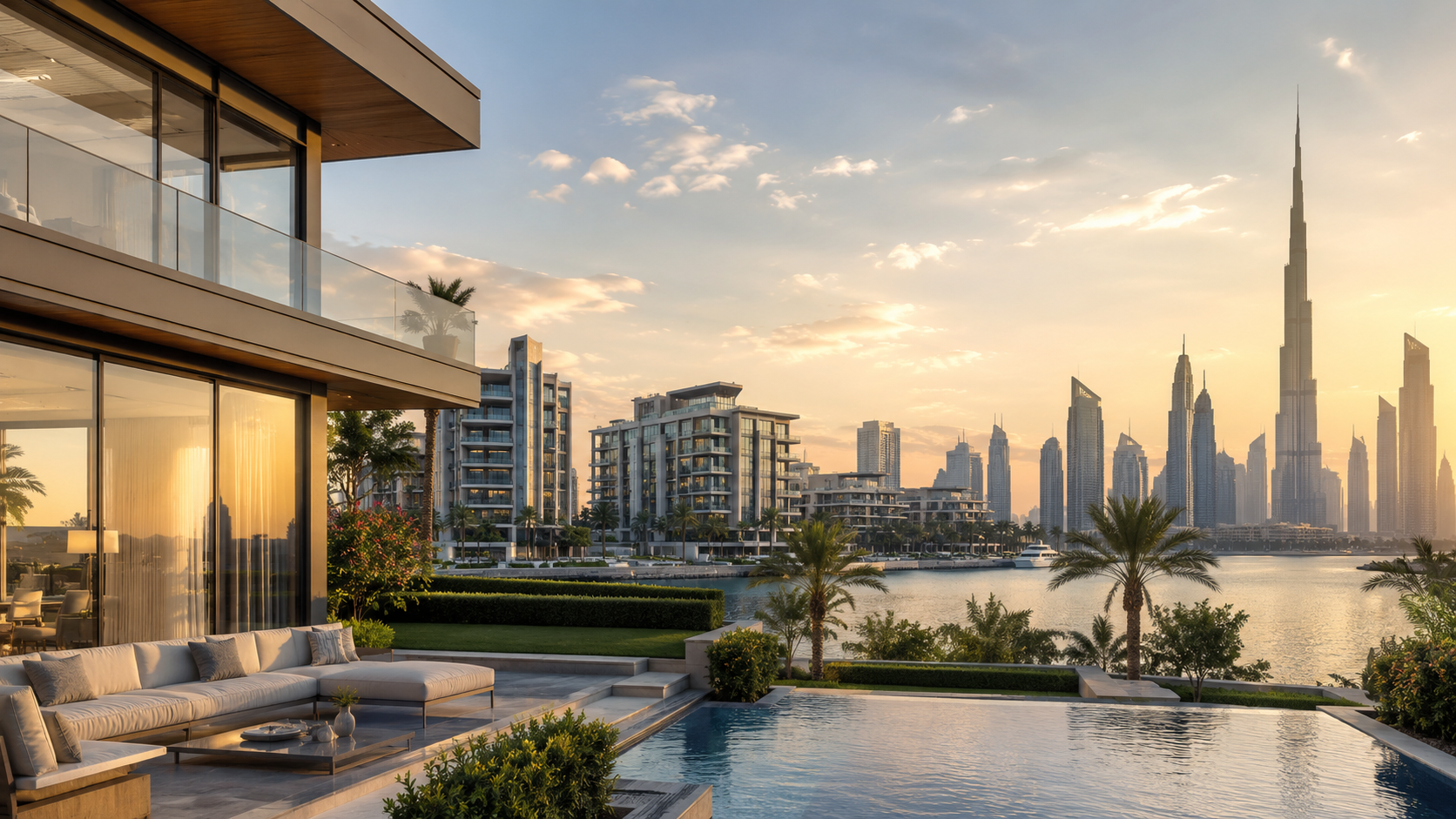
The UAE has become the global focal point for wellness and branded luxury residences. Across Dubai and Abu Dhabi, the category that began with hotel logos attached to towers has matured into something more demanding, where buyers expect the name on the tower to deliver substance: clinical wellness infrastructure, longevity programming, and operator continuity over a long hold. For international investors and families navigating this shift, advisory firms like CrossBridge work between the marketing and the contract to test those claims before purchase.
The market data tracks the shift. Knight Frank's Global Branded Residence Survey ranks the Middle East ahead of every other region for pipeline activity, driven primarily by the UAE and Saudi Arabia. Globally, these residences command average premiums of around 33% according to Savills, though the variables earning that premium have changed.
How Branded Residences Took Hold in the UAE
A branded residence borrows the design identity, service standards, and resale credibility of an established name. The earliest UAE examples leaned heavily on hotel partnerships: Armani at the Burj Khalifa, Bulgari on Jumeirah Bay Island, the Address across multiple districts. The category today covers fashion houses, automotive marques, watch makers, and a growing tier of wellness specialists.
The economics behind the model are well established. Named residences typically price between 20% and 35% above unbranded peers in the same area, with resort-style and ultra-prime locations commanding more. The UAE compounds those premiums through its tax position, freehold ownership for foreign buyers, and the Golden Visa route attached to qualifying property investments.
Two reasons explain why the category has grown so quickly in the UAE specifically. The first is policy: the UAE National Strategy for Wellbeing 2031 directs urban planning, building codes, and public infrastructure toward health-led design, giving developers and partners a tailwind few other jurisdictions offer. The second is buyer demographics. Dubai now hosts a deepening pool of long-stay families and family offices, alongside a steady inflow of international wealth. Both groups treat property as a long-term position rather than a trade.
Why Wellness Became the New Luxury Standard
The shift toward wellness predates the current cycle, but the post-2020 window accelerated it. Buyers spending more time in their primary residence began evaluating what the home actually contributed to daily life. Air quality, sleep, light cycles, water filtration, and access to recovery infrastructure replaced marble finishes and chandelier height as the priorities discussed in sales meetings.
The hospitality houses moving fastest carry operational depth in wellness itself. Six Senses arrived in Dubai with two decades of experience built around sleep, nutrition, and longevity. SHA Wellness built its UAE residential offering on the back of a clinic operating in Alicante since 2008. Bulgari leans on Marriott's hospitality infrastructure. Across the category, the names whose premiums hold cleanest tend to be the ones whose service delivery they own or control directly, rather than licensing to a third party.
A working list of what is becoming standard at the top of the category:
- Hyperbaric oxygen chambers and cryotherapy suites
- Longevity clinics with diagnostic and preventive-care capability
- Hydrotherapy circuits, contrast therapy, and recovery lounges
- Circadian lighting systems integrated through residential floors
- Biophilic design, low-VOC finishes, and high-grade water filtration
- Sleep-optimised bedrooms with acoustic engineering
Wellness infrastructure of this kind is structurally difficult to retrofit. The premium attached to a properly programmed wellness building therefore tends to hold up better than premiums tied to design or styling alone.
Dubai's Flagship Wellness and Branded Residences
Dubai anchors most of the UAE pipeline. The projects below sit at the front of both the wellness-led and the wider category, with a sampling of well-known partnered inventory included for context.
| Project | Partner | Location | Category | Status |
|---|---|---|---|---|
| Six Senses Residences | Six Senses | Palm Jumeirah | Wellness-led, 60,000 sq ft wellness centre with NOVA Clinic longevity programme | Opening 2026 |
| Six Senses Residences | Six Senses | Dubai Marina | Wellness-led, dedicated longevity floor: hyperbaric, cryotherapy, hydrotherapy | Under construction |
| Bulgari Lighthouse | Bulgari (Marriott) | Jumeirah Bay Island | Hotel-anchored, ultra-prime waterfront | Under construction |
| Armani Residences | Armani | Burj Khalifa, Downtown | Hotel-anchored, design-led | Live |
| Mercedes-Benz Places | Mercedes-Benz / Binghatti | Downtown | Automotive-led, lifestyle | Under construction |
| Émerge Residences | Elysian Developments | Meydan | Wellness-led, biohacking suites, longevity clubhouse | Handover Q4 2027 |
Within this list, the wellness-led projects show the most operational differentiation. A 60,000 square foot wellness centre paired with a clinical partner like NOVA delivers measurable difference from a similar-sized amenity floor with no clinical programming. The long-term premium tends to live in the gap between facility and infrastructure.
Beyond Dubai: Abu Dhabi and Ras Al Khaimah
Abu Dhabi has taken a different route to Dubai. Where Dubai concentrates partnered inventory across multiple districts, Abu Dhabi has clustered most of its premium supply across Saadiyat Island and Al Jurf, with a buyer pool that often favours residency-led over status-led acquisitions.
| Project | Partner | Location | Category | Status |
|---|---|---|---|---|
| SHA Residences Emirates | SHA Wellness | Al Jurf Island, Abu Dhabi | Wellness-led, 97 villas and 62 flats, direct SHA Clinic access | Opening 2026 |
| Nobu Residences | Nobu | Saadiyat Island | Lifestyle-led, 88 homes alongside hotel and beach | Under construction |
| Mandarin Oriental Residences | Mandarin Oriental | Saadiyat Cultural District | Hotel-anchored, 228 homes | Opening 2028 |
| Four Seasons Private Residences | Four Seasons | Saadiyat Island | Hotel-anchored, gated beachfront, villas and suites | Opening 2029 |
| Nikki Beach Residences | Nikki Beach / Aldar | Al Marjan Island, RAK | Wellness-oriented, FitWell and LEED Silver certified | Opening 2028 |
SHA Residences Emirates is the clearest example in the country of a residence built around the operator. The same entity owns the clinical infrastructure, runs the residential operation directly, and integrates in-residence treatment access into the ownership package. Buyers gain access to SHA's signature longevity programmes, in-residence catering by SHA chefs, and the wider SHA Privileged member benefits across all current and future properties.
Ras Al Khaimah is building a parallel pipeline anchored by the Wynn integrated resort. Nikki Beach Residences is the first named development to open in that market, with FitWell and LEED Silver certifications attached to the building. The wellness-led sub-segment in RAK and Sharjah remains earlier-stage, but the broader trajectory suggests that will change in the next cycle.
Four Variables That Define a Buyable Wellness Project
Project maturity in this category has surfaced four variables that consistently separate the buyable projects from the marketed ones. These are the questions independent advisors like CrossBridge press hardest on during due diligence.
Operator Covenant
The name on the contract and the operator running the wellness facility need to be the same entity, or contractually bound through the licensing terms. A wellness offering licensed to a third party with weaker capability and a shorter horizon will not hold its premium beyond the early handover period. Operators with in-house clinical capability, like Six Senses and SHA, sit on the stronger side of this distinction.
Space Allocation and Clinical Programming
A sauna and a steam room are amenities. A clinically operated longevity floor with diagnostic capability is infrastructure. The difference shows up in capital cost, ongoing operating cost, and the resale narrative five or ten years out. Buyers should ask for the actual square footage allocated to programmed wellness, the equipment specification, and the clinical partnerships behind the operation.
Licensing Structure
Licences in this category run on defined terms. Some sit at 10 years, others extend longer or include renewal options tied to performance. The exit price down the line depends on whether the name and operator remain attached to the building at the point of sale. Independent advisors typically read the licensing schedule alongside the SPA, never after it.
Exit Liquidity and Resale Profile
The branded residence category is expanding fast, and second-hand stock behaves differently from primary launches. Projects that hold a resale premium across a long hold are the ones where the wellness offering remains operationally credible across the full ownership period. Patchy operator continuity, partner exits, or downgraded programming all show up in the resale data three to five years after handover.
Risks and Trade-offs in a Maturing Category
The growth story carries genuine counter-points. Saturation in Dubai is real. A growing number of new entrants from fashion, automotive, and lifestyle categories lack the operating depth that hotel and wellness houses bring, and some of the premium attached to their towers will likely compress as the second-hand market matures.
Delivery capacity is also being tested. Knight Frank's analysis shows on-time completion rates running well below the registered pipeline, with around 64% of promised supply delivered on time in 2025. Wellness projects specifically require the operator's commitment to opening on time and to specification to match the developer's construction track record. A wellness centre that opens 18 months late, or opens with reduced programming, can change the entire investment case for a building.
The cleanest projects are the ones where the named partner, the operator, and the developer are aligned on the wellness offering as a long-term commitment rather than a launch story.
Looking Past the Brochure
Wellness has settled into place as the structural axis of the branded residence category across the UAE. Not every project that adds a cold plunge and a meditation room qualifies for the premium that genuine wellness-anchored buildings carry. Selection now turns on operator depth, licensing scrutiny, and design integrity, alongside the standard checks any luxury property acquisition involves.
Buyers entering this segment in 2026 and beyond will sort the long-term winners from the name-deep, operation-light projects through closer reading than the marketing material allows. Independent counsel earns its place at the contract stage, when marketing claims need to be tested against legal language and operator covenants.
Few categories reward independent advisory the way a wellness-led residence does. CrossBridge works between the marketing and the contract, helping international investors and families read the operator covenant, scrutinise the licensing terms, structure the holding vehicle, and stay close to the asset through the hold. Conversations with the advisory team are confidential.