Voor Europese vastgoedbeleggers draait de keuze voor een internationale vastgoedmarkt niet langer alleen om het vinden van een aantrekkelijk appartement of het kopen van een woning op een populaire bestemming. Kopers houden steeds vaker rekening met een breder scala aan factoren: beleggingsrendement, eigendomsregels, economische omstandigheden, lifestylemogelijkheden, internationale bereikbaarheid en het langetermijndoel van hun vastgoedaankoop.
Introduction: Why Is Dubai Becoming an Interesting Property Destination for European Buyers?
For European property investors, choosing an international real estate market is no longer simply about finding an attractive apartment or purchasing a property in a popular destination.
Buyers increasingly consider a wider range of factors: investment performance, ownership regulations, economic conditions, lifestyle opportunities, international accessibility and the long-term purpose of their property purchase.
Dubai has become an important destination in this conversation.
Over recent years, the emirate has developed an international residential property market offering everything from centrally located apartments and waterfront residences to private villas and branded luxury developments.
Its international business environment, modern infrastructure, diverse residential communities and access to global markets have attracted buyers from different parts of Europe.
The interest is supported by recent research. The 2026 UAE Property Investment Index, commissioned by Arada, identified the UAE as the leading property investment destination outside their home country among surveyed French, German and Swiss investors.
However, the reasons behind this interest differ between buyers.
Some are looking for an additional international property investment. Others are exploring a possible future relocation, a second residence or a property that combines personal use with rental potential.
The important question is not simply whether Dubai is attractive.
It is whether the available properties, ownership structures and financial considerations make sense for an individual European buyer.
In this guide, we explore the reasons behind European interest in Dubai, the locations worth researching, the buying process and the key considerations before making an investment.
1. Why Are European Investors Exploring Dubai Property?
Dubai offers a different property market from many established European cities.
In London, Paris, Berlin, Amsterdam and other major European destinations, property buyers often face established pricing structures, local taxation systems, financing requirements and restrictions that differ from those in the UAE.
Dubai provides another market to consider, with its own ownership regulations, property transaction costs, rental market and investment opportunities.
There are several reasons why European buyers are researching it.
International property diversification
Some investors prefer not to concentrate all their property exposure in one country.
Owning property in another market may provide geographical diversification and access to a different residential rental environment.
Dubai offers multiple property categories, including apartments, villas, townhouses, waterfront residences and luxury developments.
However, international diversification also introduces additional considerations, including currency exposure, overseas ownership arrangements, local legal requirements and taxation in the investor's home country.
Potential rental income
Rental income is an important consideration for investors comparing international property markets.
Dubai has an established residential leasing market, supported by its international workforce, business activity and expatriate population.
According to Engel & Völkers' H1 2026 residential market report, average gross residential rental yield reached 6.6% in June 2026, with apartments averaging 6.9%.
These are market-level gross figures, not guaranteed returns for individual properties.
Actual performance depends on the purchase price, building, location, tenant demand, service charges, maintenance and vacancy periods.
International lifestyle opportunities
For some European buyers, the attraction is not limited to financial performance.
Dubai offers an alternative lifestyle with waterfront communities, restaurants, international schools, leisure facilities and access to a wide range of residential environments.
Some buyers may initially explore the city as an investment destination before considering whether it could also become part of their future lifestyle plans.
For others, the property may be intended primarily as a second residence.
Understanding the intended use is essential because a property suitable for rental income may not necessarily be the best choice for personal living.
2. What European Buyers Should Know About Dubai Property Ownership
One of the first questions international buyers ask is whether they can legally own residential property in Dubai.
Foreign nationals can purchase freehold properties in designated areas of Dubai, subject to the applicable ownership and registration rules.
The ownership process is regulated through the relevant UAE real estate authorities, with the Dubai Land Department responsible for property registration.
Buyers should verify the ownership status of the exact property before making a financial commitment.
Important considerations include:
Whether the development is in a designated foreign-ownership area.
Whether the seller has valid ownership documentation.
Whether the property has any registered mortgage or other liabilities.
Whether the sale agreement clearly identifies the purchase obligations.
Whether the project and developer documentation are properly registered.
What transaction and registration costs apply.
For European buyers purchasing remotely, independent legal review and verification are particularly important.
A property should never be selected solely because it is advertised as foreign-investor friendly.
The specific ownership rights, contractual terms and registration arrangements should be checked before proceeding.
3. Dubai vs European Property Markets: What Should Buyers Compare?
Comparing Dubai with European cities requires looking beyond advertised property prices.
A property in Dubai cannot automatically be compared with one in London, Berlin or Paris based on price per square metre alone.
The rental environment, operating costs, ownership structure, financing arrangements and taxation may be significantly different.
The following factors are useful starting points.
| Investment consideration | Dubai | European property markets |
|---|---|---|
| Ownership | Foreign freehold ownership in designated areas | Depends on the country and local ownership regulations |
| Rental market | Established residential rental market with different tenant segments | Varies significantly between countries and cities |
| Income taxation | No UAE personal income tax on ordinary employment income; other tax and business rules may apply | Varies by country and individual circumstances |
| Property costs | Purchase, registration, service charges and maintenance costs apply | Transaction taxes, maintenance and recurring charges vary |
| Residency | Certain qualifying property purchases may support UAE residency applications | Depends on each country's immigration rules |
| Lifestyle | International city environment, waterfront communities and modern residential developments | Different climates, cultures and established urban environments |
| Investment risk | Property prices, supply, vacancy and resale conditions | Property prices, financing, regulation and local economic conditions |
An important point for European buyers is that owning property in Dubai does not automatically change their tax residency or remove their tax obligations in Europe.
Tax treatment depends on the individual's country of tax residence, applicable tax treaties, ownership structure and personal circumstances.
Before purchasing, investors should obtain advice from a qualified tax professional familiar with both the UAE and their home jurisdiction.
The purpose of international investment should be to understand the complete financial picture rather than rely on simplified claims about tax advantages.
4. Which Dubai Areas Should European Buyers Consider?
Dubai offers different residential environments, and the right choice depends on whether the buyer prioritises lifestyle, rental demand, property size, accessibility or long-term investment considerations.
Here are five locations worth researching.
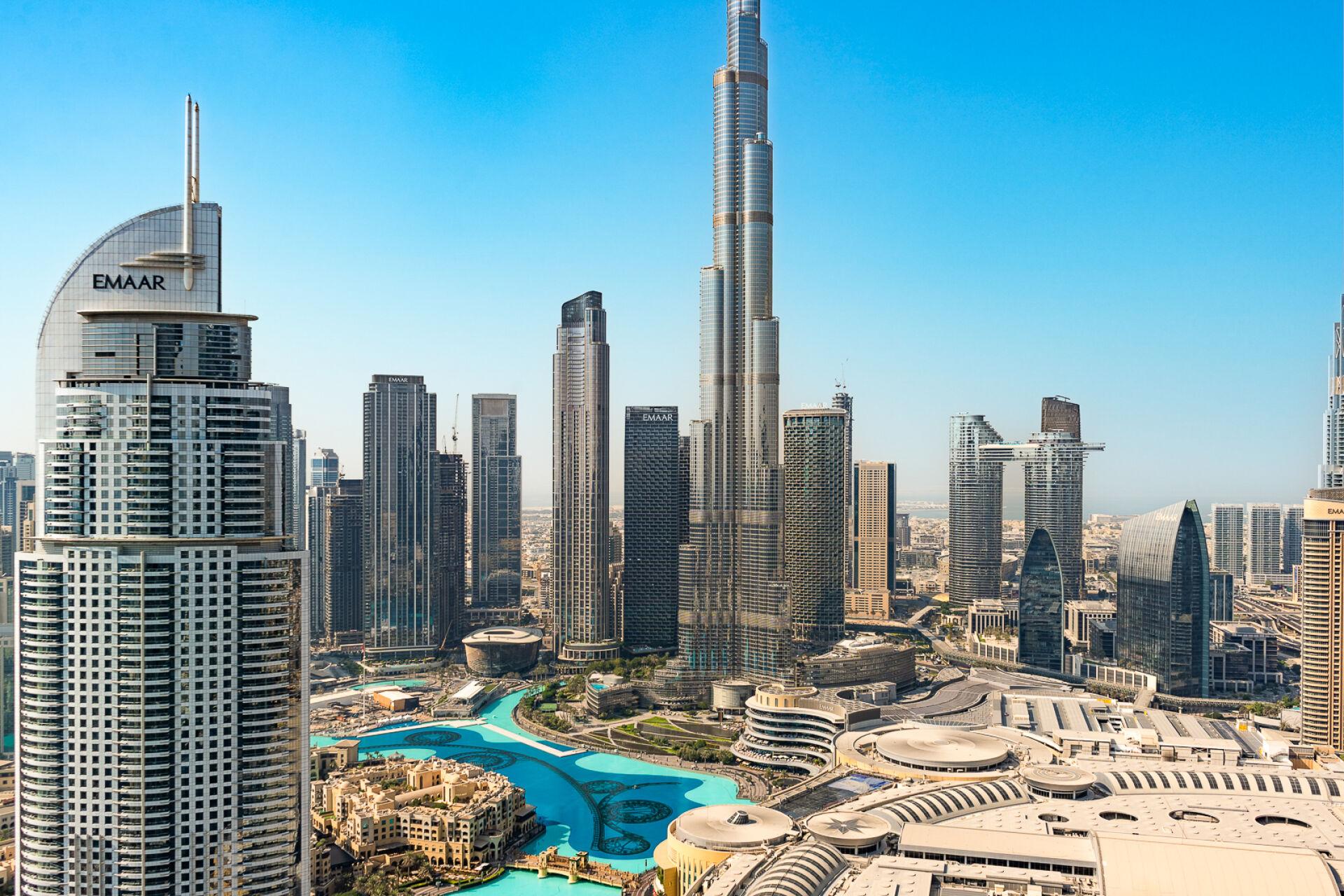
Downtown Dubai: For central city living
Downtown Dubai is one of the city's most recognisable residential destinations.
Its location provides access to major retail, hospitality, restaurants and business facilities.
It may appeal to international buyers looking for an apartment in an established central district.
European buyers comparing Downtown properties should examine individual buildings, views, layouts, service charges and achieved rental prices.
The premium attached to a central address should always be considered against the property's actual financial performance.
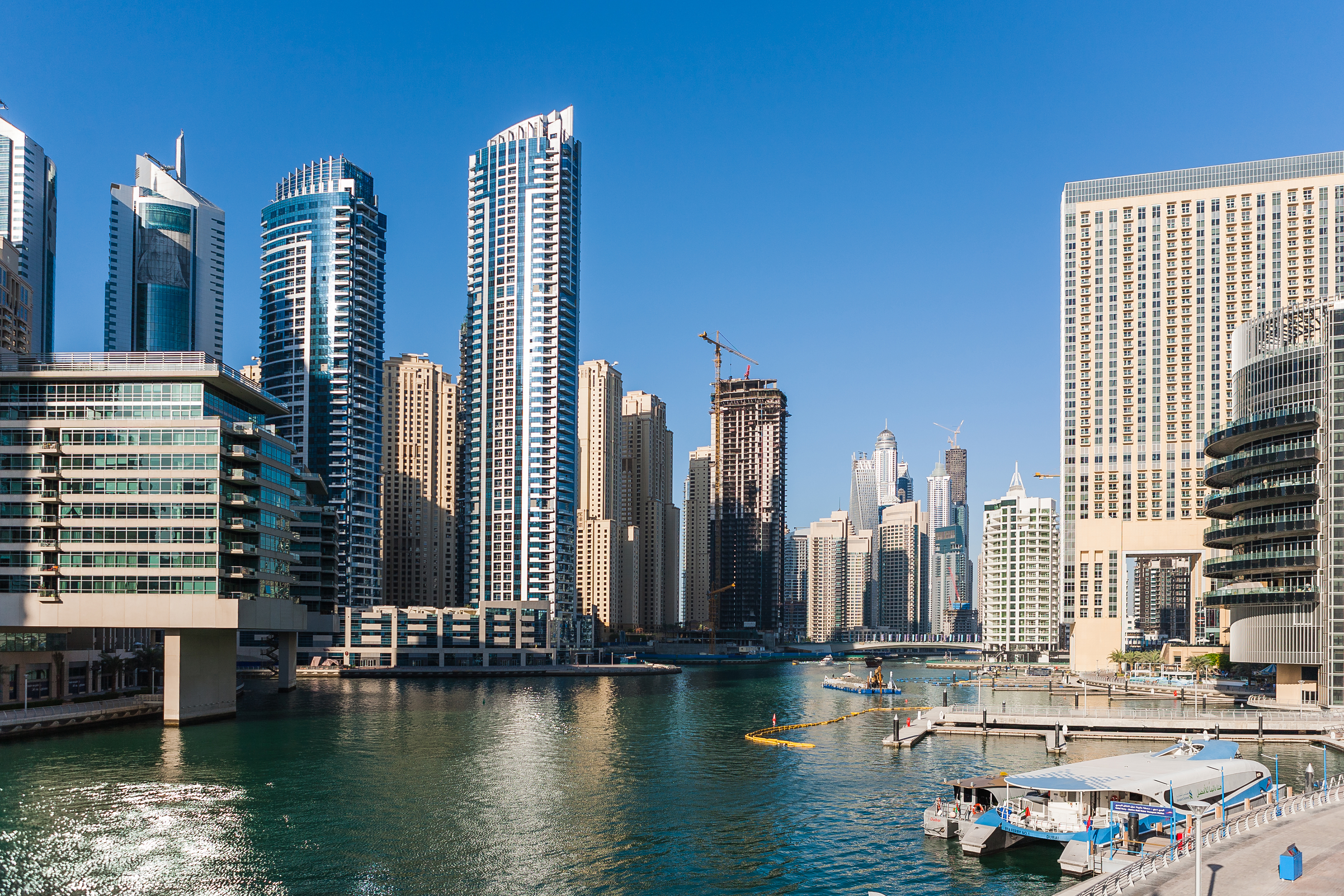
Dubai Marina: For waterfront living
Dubai Marina combines residential towers, restaurants, waterfront promenades and leisure facilities.
It is an established choice for buyers interested in an urban waterfront lifestyle.
The area offers different apartment types and price categories, making it important to compare buildings rather than treating the entire community as one market.
Building condition, maintenance, service charges and the quality of the surrounding facilities should all be considered.
Dubai Hills Estate: For family-oriented living
Dubai Hills Estate offers a different residential environment, with landscaped surroundings, parks, retail facilities and a variety of apartment and villa options.
It may appeal to European families and buyers who prefer a more community-focused residential setting.
For larger homes, investors should carefully compare maintenance requirements, service charges and the potential rental audience.
Palm Jumeirah: For premium waterfront property
Palm Jumeirah is internationally recognised for its waterfront residences, luxury hospitality and distinctive residential setting.
It attracts attention from buyers looking for premium apartments and villas.
However, a prestigious location does not automatically guarantee investment performance.
Buyers should examine the specific property's purchase price, condition, service charges, rental demand and resale comparables.
Business Bay: For urban residential investment
Business Bay offers a mix of residential towers, commercial buildings and hospitality facilities.
Its proximity to Downtown Dubai makes it relevant for buyers researching centrally located apartments.
Investors should compare the quality and management of individual buildings, accessibility, views and rental performance.
The best investment may not always be in the most famous neighbourhood. Sometimes the stronger opportunity is a well-priced property in a location with consistent tenant demand.
5. Off-Plan or Ready Property: Which Is Better for European Investors?
European buyers often encounter two main property options in Dubai: off-plan developments and completed properties.
Both can be considered, but they offer different advantages and risks.
Off-plan properties
Off-plan properties are purchased before construction is completed.
They may offer staged payment structures, access to new developments and the opportunity to select units at an earlier project stage.
For international investors, an off-plan property can be relevant when planning a longer-term investment.
However, buyers should investigate:
Developer delivery history.
Project registration and escrow arrangements.
Construction progress.
Contractual handover terms.
Total payment obligations.
Future competing supply.
Potential resale restrictions and costs.
A flexible payment plan should not be confused with a guaranteed investment opportunity.
Ready properties
Completed properties allow buyers to inspect the actual apartment or villa and assess the surrounding community.
They also provide a more immediate basis for investigating rental demand and comparable transactions.
For buyers who want greater visibility into the physical asset, ready properties may be a useful starting point.
However, investors must still evaluate the building's condition, existing tenancy arrangements, maintenance costs and purchase price.
Which strategy makes sense?
| Investment objective | Off-plan property | Ready property |
|---|---|---|
| Payment planning | Staged payments may be available | Depends on purchase and financing terms |
| Rental income | Usually begins after handover and leasing | Potentially available sooner |
| Inspection | Depends on construction stage | Actual property can be inspected |
| Main risks | Construction, delivery and future supply | Maintenance, vacancy and existing tenancy |
| Investment horizon | Often longer-term | Depends on property and investment plan |
The right decision depends on the buyer's financial position, timeline and willingness to accept project-related risks.
6. Understanding Dubai Rental Yields Before Investing
Rental yield is one of the most frequently researched subjects among international property buyers.
However, it is important to distinguish between gross yield and net yield.
Gross rental yield is calculated by dividing annual rental income by the purchase price.
For example:
Assume a property is purchased for AED 2,000,000 and generates AED 120,000 in annual rental income.
AED 120,000 ÷ AED 2,000,000 × 100 = 6% gross rental yield.
But this does not represent the investor's final return.
The calculation must also account for:
Annual building service charges.
Maintenance and repair expenses.
Property management fees.
Insurance where applicable.
Vacancy periods.
Financing expenses, if applicable.
Purchase and registration costs.
For example, if annual operating expenses total AED 25,000, the remaining income is AED 95,000 before financing and other excluded expenses.
This represents 4.75% of the original purchase price.
The example is illustrative, not a rental quotation or guaranteed investment result.
European buyers should also consider currency movements between the euro, pound sterling or Swiss franc and the UAE dirham.
A property may perform well in AED terms, but the investor's final financial outcome in their home currency can differ.
7. Can European Buyers Obtain UAE Residency Through Property Ownership?
Residency is another subject that frequently attracts international property buyers.
The UAE offers several residency pathways, including programmes for qualifying property investors.
Under the UAE's applicable Golden Visa framework, qualifying real estate investors may be eligible for a long-term residency permit, subject to the relevant conditions.
Dubai Land Department provides information on real estate residency services and property eligibility.
However, buyers should understand that:
Property ownership does not automatically grant residency.
Eligibility depends on the applicable programme and current requirements.
Property valuation, ownership status and financing arrangements may affect eligibility.
The relevant authorities make the final decision.
Residency in the UAE does not automatically determine tax residency in another country.
Buyers considering property specifically for residency purposes should verify the current criteria with the Dubai Land Department and relevant immigration authorities before purchasing.
It is important to treat residency as a separate consideration from the property's investment performance.
8. What Makes Dubai Attractive Beyond Property Investment?
A property is not only a financial asset. For buyers considering personal use or future relocation, the surrounding lifestyle can be equally important.
Dubai offers several residential environments that provide different experiences.
International connectivity
Dubai is a major international travel and business destination, with connections to cities across Europe and other global regions.
This can be relevant for professionals and business owners who travel regularly.
Residential variety
From central apartments to waterfront residences and private villas, buyers have a broad range of property types to consider.
Outdoor lifestyle
During the cooler months, residents can enjoy beaches, outdoor cafés, waterfront promenades, parks and community activities.
International community
Dubai's population includes residents from many nationalities, creating an international environment for people relocating from Europe.
Business and professional environment
The city provides access to business districts, international companies, entrepreneurship opportunities and a range of professional services.
These characteristics may make Dubai attractive as a place to live, work or maintain a second residence.
Nevertheless, prospective residents should also consider the cost of accommodation, schooling where relevant, healthcare, transport and their individual residency circumstances.
9. What Should European Buyers Check Before Purchasing?
International property purchases require careful preparation.
A buyer located in Europe may be researching a development remotely, comparing information from different agents and reviewing projects they have not yet visited.
A structured due diligence process helps reduce uncertainty.
Here is a practical checklist.
Before choosing a property
Establish a realistic purchase budget.
Define whether the objective is rental income, personal use or long-term ownership.
Compare multiple communities.
Review comparable property transactions.
Understand the intended ownership structure.
Before signing
Verify the developer or seller.
Confirm the property's ownership and registration status.
Review the sale and purchase agreement.
Check all payment obligations.
Understand registration fees and other transaction expenses.
Obtain independent legal and tax advice where necessary.
Before completing the investment
Review the handover or inspection arrangements.
Confirm service-charge obligations.
Understand property management arrangements.
Establish a realistic rental and vacancy assumption.
Consider how the property could be resold.
For off-plan projects, developer reputation, escrow arrangements and construction progress deserve particular attention.
For ready properties, building condition, ownership documentation and actual rental evidence should be priorities.
A well-informed buyer should understand the property before committing capital.
10. Is Dubai Suitable for Every European Property Investor?
Dubai can offer interesting opportunities, but it is not automatically suitable for every investor.
Buyers should consider their financial position, investment horizon, liquidity needs, home-country tax obligations and risk tolerance.
An investor seeking immediate rental income may prefer a completed property with verifiable rental comparables.
Someone planning a longer-term purchase may consider off-plan developments, provided the developer and project are properly assessed.
A buyer interested in personal use may place greater importance on location, privacy, schools, lifestyle facilities and international access.
A luxury investor may prioritise a different set of factors, including architectural quality, views, scarcity and the profile of potential future buyers.
There is no single property type or neighbourhood that suits every European buyer.
The strongest approach is to compare opportunities according to the actual purpose of the purchase.
11. Why Professional Property Advisory Matters for International Buyers
Researching Dubai property from another country can be challenging.
International buyers may encounter different developers, payment structures, ownership rules, marketing claims and financial projections.
Comparing these opportunities without a clear framework can make it difficult to identify which properties genuinely match their objectives.
A structured advisory approach can help buyers:
Identify relevant residential communities.
Compare off-plan and ready properties.
Review developer and project information.
Understand the purchase process.
Compare rental assumptions and ownership expenses.
Explore properties within a defined budget.
Organise property visits and further due diligence.
At CrossBridge Real Estate, we believe property selection should begin with the buyer's requirements rather than the latest project launch.
Our focus is on helping international buyers explore Dubai residential opportunities through a more informed and structured process.
Whether you are based in London, Paris, Berlin, Zurich or Amsterdam, understanding the property, location and financial considerations is an important first step.
Conclusion: Is Dubai Worth Exploring for European Property Buyers in 2026?
Dubai has become an important international property destination for buyers researching opportunities beyond their domestic markets.
Recent investment sentiment research shows meaningful interest among French, German and Swiss investors, while transaction reporting confirms that British and other European buyers are active in the market.
But interest alone does not make a property a good investment.
European buyers should compare the complete picture: purchase price, rental potential, ownership regulations, transaction costs, service charges, future supply and home-country tax obligations.
They should also consider whether the property fits their intended lifestyle, investment horizon and financial objectives.
Dubai offers a broad residential market, but the strongest opportunity will always depend on the individual property and the buyer's circumstances.
Thinking about buying property in Dubai?
CrossBridge Real Estate can help you explore available residential opportunities, compare locations and identify properties aligned with your investment or lifestyle requirements.
Start with a clear investment brief and make your next property decision with better information.
CrossBridge Real Estate | Dubai Property Advisory
Website: https://crossbridge.estate
Frequently Asked Questions
Can European citizens buy property in Dubai?
Yes. Foreign nationals, including European citizens, can purchase freehold property in designated areas of Dubai, subject to applicable ownership and registration rules.
Which European nationalities are investing in Dubai property?
British, German and French buyers are among the European nationalities reported in Dubai's international property market. Swiss and other European investors are also showing interest in the UAE as an international investment destination.
Is Dubai property a good investment for German buyers?
Dubai may offer German buyers access to a different residential market, rental opportunities and international property diversification. However, every investment should be assessed according to purchase price, costs, rental evidence, legal requirements and German tax obligations.
Can UK residents purchase property in Dubai?
Yes. British nationals can purchase property in Dubai's designated freehold areas, subject to the applicable regulations. They should also consider their UK tax position and obtain appropriate professional advice.
What is the minimum investment required to buy property in Dubai?
There is no single minimum purchase price for all Dubai properties. Prices depend on location, property type, development and market conditions. Additional purchase and registration costs should also be included in the budget.
Can European buyers rent out their Dubai property?
Owners can generally rent out eligible residential properties, subject to the applicable tenancy, registration, building and regulatory requirements. Rental income and expenses should be evaluated before purchasing.
Do European investors pay tax on Dubai rental income?
The answer depends on the investor's tax residence, applicable local rules and any relevant tax agreements. Dubai property ownership does not automatically exempt a European tax resident from reporting or paying taxes in their home country. Professional tax advice is recommended.
Can buying property in Dubai provide a Golden Visa?
Qualifying property investors may be eligible for UAE Golden Visa residency under the applicable rules. Property ownership alone does not guarantee approval, and buyers should verify current requirements with the relevant authorities.
Is off-plan property suitable for international investors?
It may suit investors with a longer investment horizon who are comfortable with construction and delivery risks. Developer track record, project registration, escrow arrangements and contractual payment terms should be reviewed carefully.
Which Dubai locations are worth considering for European buyers?
Downtown Dubai, Dubai Marina, Dubai Hills Estate, Palm Jumeirah and Business Bay offer different residential experiences. The most suitable location depends on budget, property requirements, intended use and investment objectives.