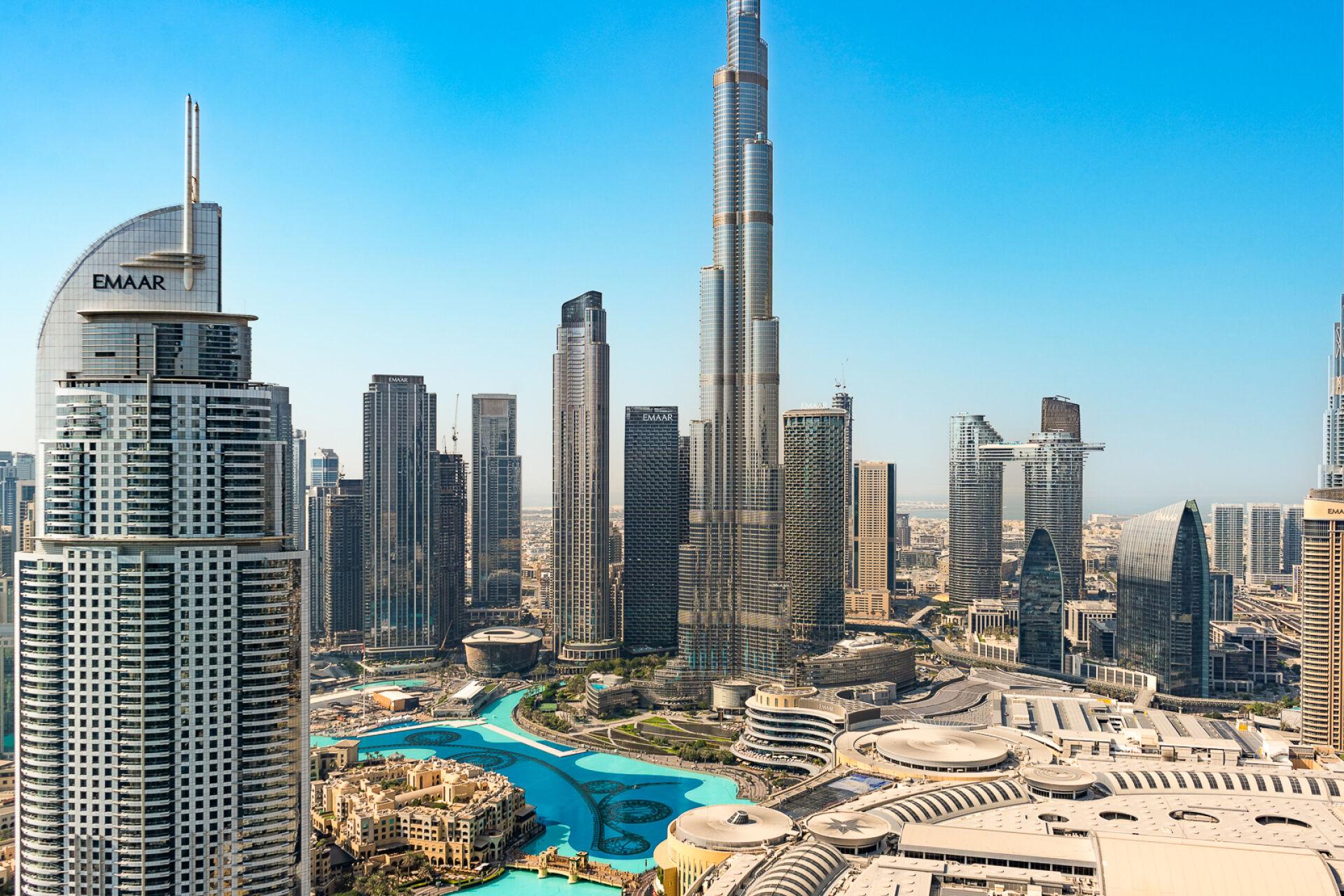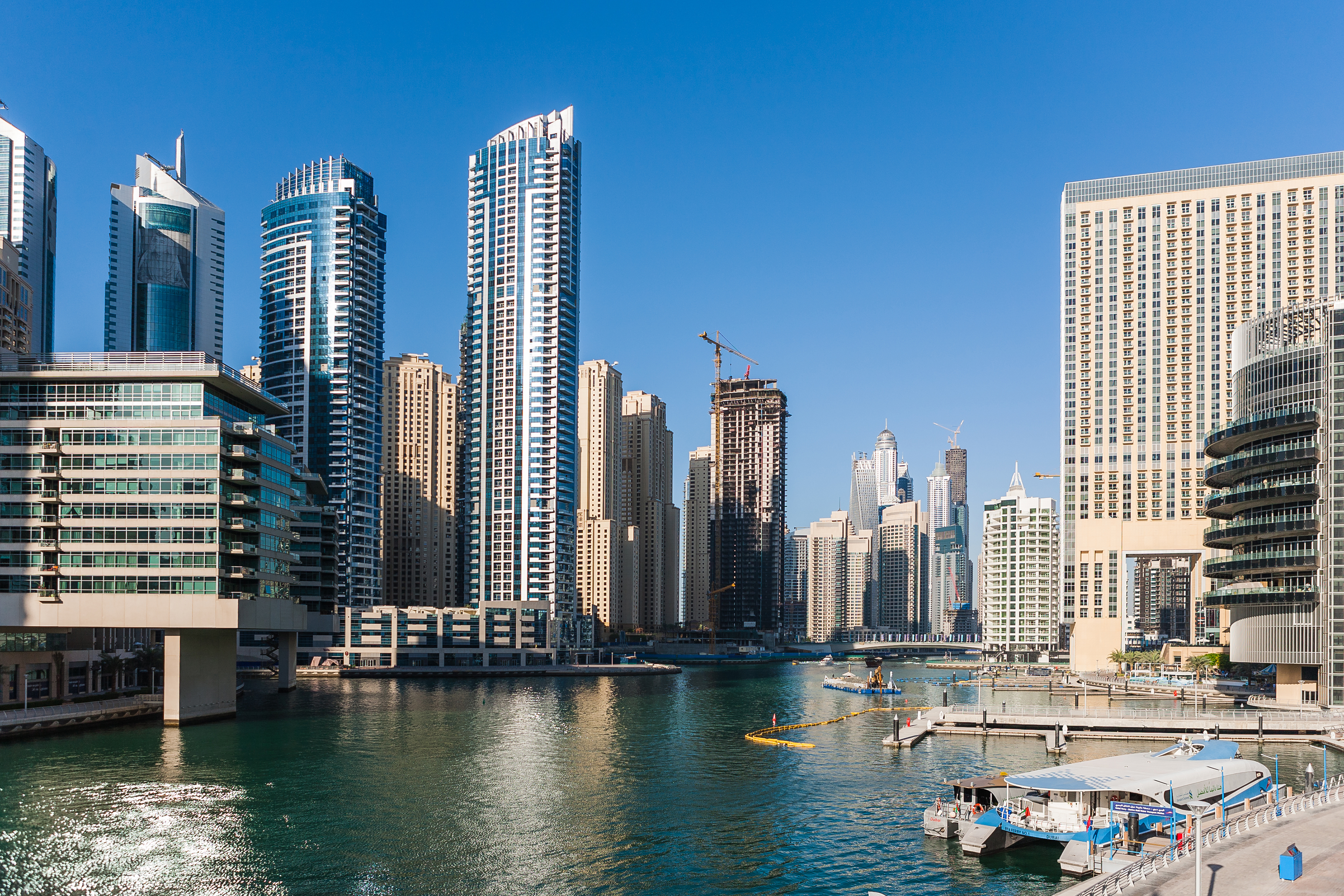
Dubái sigue atrayendo a personas con alto patrimonio que buscan conectividad global, ventajas fiscales, residencia a largo plazo, calidad de vida y oportunidades inmobiliarias estratégicas. Para los inversores sofisticados, la ciudad representa cada vez más una plataforma para los negocios, la creación de riqueza y el posicionamiento de capital a largo plazo.
Dubai has moved beyond its reputation as simply a fast-growing real estate market. For entrepreneurs, family offices, business owners and internationally mobile investors, the city is increasingly considered within a much broader conversation: where to establish businesses, position capital, relocate families and build a long-term international presence.
This helps explain why high-net-worth individuals continue to invest in Dubai.
Tax efficiency remains part of the appeal, but it is no longer the entire story. Infrastructure, international connectivity, long-term residency options, quality of life and access to a globally connected business environment have become equally important considerations.
For sophisticated investors, Dubai increasingly represents more than an investment destination. It can serve as a strategic base connecting business, property, lifestyle and long-term wealth planning.
Why Dubai Attracts High-Net-Worth Individuals
Global wealth has become increasingly mobile. Entrepreneurs and investors are more willing to reconsider where they live, operate businesses and hold assets when another jurisdiction offers greater access, efficiency and long-term opportunity.
Dubai has positioned itself strongly within this shift.
The city brings together international businesses, private capital, entrepreneurs, financial institutions and investors within one connected environment. For high-net-worth individuals, this creates something particularly valuable: flexibility.
Investors can establish a business presence, acquire property, relocate family members and maintain access to major international markets from a single location.
1. A Tax Environment That Supports International Wealth
Tax efficiency remains one of the most recognised reasons wealthy individuals consider Dubai and the wider UAE.
The UAE does not impose personal income tax on individuals, which can make the jurisdiction attractive to entrepreneurs, investors and internationally mobile professionals.
However, sophisticated investors rarely consider tax in isolation.
High-net-worth individuals may have companies, properties, investments and tax obligations across several countries. Nationality, tax residency, corporate ownership and the location of underlying assets can all influence an individual's financial position.
Dubai's wider appeal therefore lies in providing an environment where international investors can establish a long-term presence while structuring their affairs with appropriate legal, tax and financial guidance.
2. Global Connectivity for International Investors
Modern wealth is increasingly international.
A business owner may operate across Europe, work with suppliers in Asia, invest in the Middle East and maintain personal connections in several other countries. For this reason, accessibility has become an important consideration when choosing where to establish a base.
Dubai's geographic position between Europe, Asia and Africa supports this international lifestyle.
Its aviation network, logistics infrastructure, communications systems and business environment allow investors to maintain relationships across multiple markets while operating from the UAE.
For many high-net-worth individuals, Dubai does not need to replace another global city. Instead, it can become an additional strategic base within a wider international network.
3. Long-Term Residency Creates Greater Certainty
Investment becomes more meaningful when investors can establish a longer-term relationship with the jurisdiction in which their capital is deployed.
The UAE's long-term residency programmes, including the Golden Visa framework for qualifying applicants, have strengthened the country's appeal to investors, entrepreneurs and internationally mobile families.
For high-net-worth individuals, the value extends beyond residency itself.
Long-term residency can support decisions involving family relocation, business establishment, property ownership, education and long-term lifestyle planning.
This changes the relationship between the investor and the market. Dubai can be considered not only as a place to acquire an asset, but as part of a broader international strategy.
4. Quality of Life Has Become Part of the Investment Decision
Where wealthy individuals choose to allocate capital is increasingly connected to where they are willing to spend their time.
High-net-worth families often evaluate cities through several factors at once, including education, healthcare, security, infrastructure, connectivity, hospitality and access to high-quality residential communities.
Dubai has developed an environment that addresses many of these requirements.
International schools, private healthcare, premium residential communities, hospitality, retail and global travel connections contribute to the city's ability to attract not only capital, but also the people behind that capital.
This distinction is important. A market can offer attractive investment opportunities, but its ability to retain wealth becomes stronger when investors also see it as a practical place to live, work and raise a family.
5. Real Estate Provides a Tangible Entry Point
Property remains one of the most visible ways international investors participate in Dubai's growth.
For high-net-worth individuals, however, the question should rarely be limited to which property to buy.
The more important questions concern how the asset fits into a wider investment strategy.
What role should the property serve within the portfolio? What is the expected holding period? How liquid could the asset be at exit? What is the developer's track record? What future supply could compete with the property? Is the objective income, capital appreciation, preservation of wealth or personal use?
These distinctions matter because Dubai is not one homogeneous real estate market.
Prime waterfront residences, established income-producing properties, emerging communities, branded residences, off-plan developments and ultra-luxury villas can perform very differently across a market cycle.
A strong market does not automatically make every property a strong investment.
6. Different Strategies for Different Types of Capital
One reason sophisticated investors continue to examine Dubai is the range of strategies available within the property market.
Some investors prioritise completed assets capable of producing rental income. Others are prepared to accept a longer investment horizon in exchange for exposure to carefully selected off-plan opportunities.
Some focus on scarcity within established prime locations, while others analyse new infrastructure corridors and developing communities where long-term growth may create future value.
For larger portfolios, diversification across multiple property types or locations may be more appropriate than concentrating capital in a single development.
There is no universally correct strategy.
The appropriate allocation depends on liquidity requirements, investment horizon, risk tolerance, personal objectives and the investor's wider portfolio.
7. Infrastructure Supports Long-Term Property Value
Sophisticated property investors tend to look beyond architecture and marketing.
They examine the wider infrastructure surrounding an asset.
Transport networks, commercial districts, schools, healthcare, hospitality, public spaces, retail, airports and future development can all influence how desirable a location becomes over time.
Dubai's continued investment in infrastructure therefore forms an important part of its long-term property proposition.
The value of infrastructure is not simply convenience. It can influence where companies establish operations, where families choose to live and which districts develop sustainable demand.
For long-term investors, these fundamentals can be considerably more important than short-term market narratives.
8. A Business Environment Built Around International Participation
Dubai's investment appeal is closely connected to its position as an international commercial centre.
The city attracts multinational businesses, entrepreneurs, investors, professional services firms and financial institutions from around the world.
This creates a reinforcing economic environment.
As businesses and professionals establish themselves in Dubai, demand grows for residential property, offices, hospitality, education and services. As infrastructure and services continue to develop, the city becomes increasingly practical for additional companies and families considering relocation.
For internationally mobile investors, property ownership can therefore form part of a much wider economic relationship with the UAE.
9. Dubai as Part of a Global Diversification Strategy
Diversification is another important consideration for sophisticated investors.
High-net-worth individuals rarely want their businesses, residences, financial assets and property portfolios concentrated entirely within one jurisdiction.
Dubai can therefore be evaluated as part of a multi-market strategy.
An investor may continue holding assets in established international markets while creating an additional presence in the UAE.
From this perspective, investing in Dubai does not necessarily mean replacing another market. It can represent geographic diversification and greater flexibility.
The objective may be to broaden asset exposure, establish additional residency options, enter new business markets or position part of a portfolio within a different economic environment.
10. Investment Discipline Still Matters
Dubai's growth does not remove investment risk.
In periods of strong demand, disciplined analysis can become even more important.
Different developers, locations and property types can perform very differently. Investors should assess factors such as developer track record, construction and delivery risk, future supply, location fundamentals, service charges, rental demand, resale liquidity, payment structures, competitive developments, entry price and exit strategy.
A premium property can still represent a poor investment if purchased at the wrong price or without a clear strategy.
Likewise, the strongest investment opportunity may not always be the property attracting the most market attention.
For sophisticated investors, protecting capital begins with filtration.
From Property Selection to Capital Strategy
This becomes particularly important when significant capital is involved.
At CrossBridge, our Private Property Counsel approach begins with understanding the investor rather than presenting a catalogue of available properties.
The objective is to evaluate opportunities within the context of each client's wider requirements.
This can include market positioning, location fundamentals, developer quality, investment horizon, liquidity, risk exposure and the role an acquisition is expected to play within a broader portfolio.
The distinction is important.
Property acquisition is a transaction. Capital allocation is a strategy.
For high-net-worth individuals, the second consideration should normally come before the first.
Why High-Net-Worth Individuals Continue to Choose Dubai
Dubai's appeal to international wealth is difficult to reduce to one tax policy, one property cycle or one headline.
Its position is supported by a combination of global connectivity, business infrastructure, long-term residency options, tax efficiency, quality of life, premium real estate and continued investment in the city's future.
Together, these characteristics have allowed Dubai to develop into an increasingly important base for entrepreneurs, investors and internationally mobile families.
The result is a property market connected to a much larger story about how global capital moves.
For investors considering Dubai, the opportunity should therefore be evaluated with the same discipline applied to any significant allocation of wealth.
Not every development will fit every investor. Not every location will perform equally. And market momentum alone should never replace careful analysis.
Confidence comes from understanding what is being acquired, why it belongs within the portfolio and how it supports the investor's long-term objectives.
That principle continues to define both Dubai's appeal and the way sophisticated capital should approach the market.
CrossBridge Private Property Counsel
CrossBridge advises international investors evaluating property opportunities across Dubai and Abu Dhabi.
Our approach focuses on informed selection, market understanding and long-term capital positioning rather than property volume.
For investors seeking greater clarity before allocating capital to UAE real estate, the process begins with strategy.